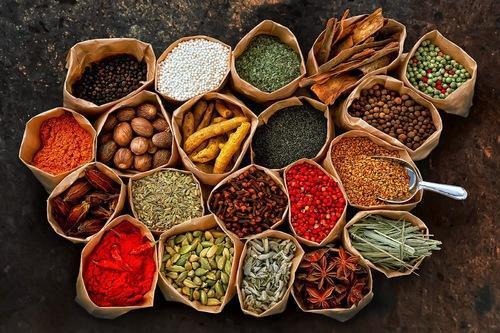
The global spice market has moved past standard kitchen powders. Today, international buyers demand export-grade dehydrated flakes, ultra-vibrant fine powders, and bioactive oleoresins. Whether you are extracting curcumin from turmeric, preserving allicin in garlic, or protecting gingerols in ginger, your profitability rests on a single metric. Specifically, you must retain the raw material’s color, aroma, and active compound integrity.
Transitioning from field-harvested crops to shelf-stable, premium products requires highly sophisticated engineering. Consequently, scaling a production line successfully depends heavily on your machinery partner.
Below is a detailed look at the machinery dynamics modern spice processing plants need to dominate the market.
1. Automated Garlic Processing: Turning Raw Bulbs into High-Yield Assets
Garlic is notoriously tricky to process mechanically. For instance, the volatile aromatic compound allicin degrades quickly if cloves are bruised. This damage triggers rapid enzymatic browning and flavor depletion. Therefore, a high-efficiency garlic processing line must control the crop gently from clove separation to high-purity extraction.
-
Dehydration & Uniform Slices: Automated lines begin by splitting the bulbs. Next, they peel them clean using specialized pneumatic air systems before precision slicing. Subsequently, sliced garlic runs through advanced dehydration lines. These systems drop moisture down to a tight 5–7% without scorching the edges.
-
Pulverizing with Built-In Cooling: Crushing flakes into fine powder creates friction heat. To counter this, advanced pulverizers use specialized cooling jackets. These jackets prevent heat damage during grinding. Furthermore, pulse-jet dust collectors ensure zero product waste on the factory floor.
-
Oleoresin and Essential Oil Recovery: Many plants aim to supply the highly profitable nutraceutical sector. Accordingly, the addition of integrated steam distillation or solvent extraction units enables the capture of pure garlic oil. This process turns a fragile crop into a stable, high-margin liquid commodity. Learn more about these setups on our specialized Engineering Portals.
2. Ginger Processing: Maximizing Bioactive Yields and Essential Oils
The commercial value of ginger is determined by its characteristic aroma and pungency. In order to handle ginger’s highly fibrous and irregular shape safely, processing plants utilize targeted mechanical workflows. This approach protects delicate active compounds like gingerols and shogaols.
-
Pneumatic Bubble Washing & Slicing: Processing starts with high-pressure bubble washers. In addition, gentle mechanical peeling strips away soil while keeping skin loss to a minimum. From there, precision cutting assemblies ensure identical slice thickness. This consistency is a necessity for uniform drying.
-
Low-Temperature Dehydration: Ginger is highly sensitive to excessive heat. As a result, modern plants deploy low-to-medium temperature thermal environments with balanced airflow. This setup effectively prevents “case hardening.” Case hardening is a major quality defect where the spice exterior dries shut while moisture remains trapped inside.
-
Solvent Extraction Units: Finally, automated solvent recovery systems distill active ginger compounds into industrial-grade oleoresins. This high-tech step satisfies strict requirements for international food, beverage, and pharmaceutical clients. Discover our custom ginger processing layouts at GTI Dryers.
3. Turmeric Processing: Fixing Vivid Color and Preserving Curcumin
Quality benchmarks for turmeric are governed by two major elements. Specifically, these are curcumin percentage and visual color brilliance. Traditional sun-drying takes weeks and allows for environmental contamination. Moreover, it actively destroys curcumin through direct UV exposure.
Industrial processing replaces these variables with a fully controlled mechanical workflow.
-
Steam Curing & Boiling: First, raw rhizomes are fed into automated steam boiling tanks. This essential step gelatinizes starch. Consequently, it permanently locks the deep yellow color uniformly across the whole root. This process drastically cuts down on downstream drying times.
-
Advanced Multi-Tier Drying: Continuous band dryers process massive bulk volumes smoothly. Alternatively, next-generation thin-film or low-temperature belt systems dry the root evenly for ultra-premium grades. This step completely shelters the heat-sensitive curcuminoids and essential oils from degradation.
-
Polishing & Grading: Once dried, rhizomes enter industrial polishing drums to remove the rough outer layer. Thereafter, they move to specialized pulverizers and automated vibro-sifters to output uniform, free-flowing, bright golden powder. You can review our complete turmeric plant specifications on our main Spice Processing Infrastructure Hub.
4. The Tech Backbone: Industrial Spice Drying Systems Compared
Dehydration is the most energy-intensive section of any spice plant. Therefore, the engineering mechanics of your drying systems dictate both your daily operational expenses and the ultimate grade of your finished goods.
Continuous Mesh Belt Dryers

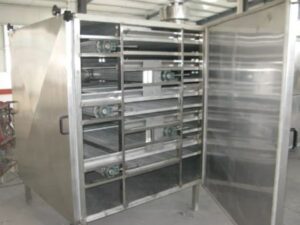
These systems are ideal for high-volume processors handling sliced ginger, garlic flakes, and leafy herbs. A porous stainless steel conveyor carries a uniform bed of raw product through tightly sealed, multi-zone heating compartments.
-
The Engineering Edge: Airflow direction can be dynamically adjusted between zones alongside automated moisture tracking. As a consequence, this results in perfectly uniform drying profiles at minimized fuel usage. Explore these systems in depth at Industrial Drying Solutions.
Fluid Bed & Multi-Stage Dehydrators
For pre-milled particles or granular spices, fluid bed dryers suspend the food particles in a lifting stream of clean, heated air. Thus, every individual spice particle is dried instantly and equally from all angles. This uniform action eliminates wet pockets and guarantees stellar microbiological safety.
Summary: Building Your Processing Infrastructure
When selecting a turnkey spice processing plant manufacturer, look beyond standard metal fabrication. Instead, your engineering partner must offer food-safety compliant materials like SS304 or SS316 stainless steel. They must also provide optimized thermal dynamics to cut utility costs, alongside precision grinding tech that protects the delicate biology of the spices.
In short, investing in intelligent, automated processing infrastructure protects your raw ingredients. Furthermore, it eliminates manual labor bottlenecks and gives your business the agility to meet strict global export protocols.
Ready to Design and Deploy Your Turnkey Spice Processing Plant?
Partner with industry leaders to customize, engineer, and optimize your dehydration and milling processing infrastructure. Therefore, contact our engineering team today to discuss your specific project requirements:
-
📧 Technical Inquiries: mktg@foodtechprojects.com
-
📞 Phone / WhatsApp Support: +91 93300 77417
-
🌐 Engineering Portals: www.foodtechprojects.com | www.gtidryers.com