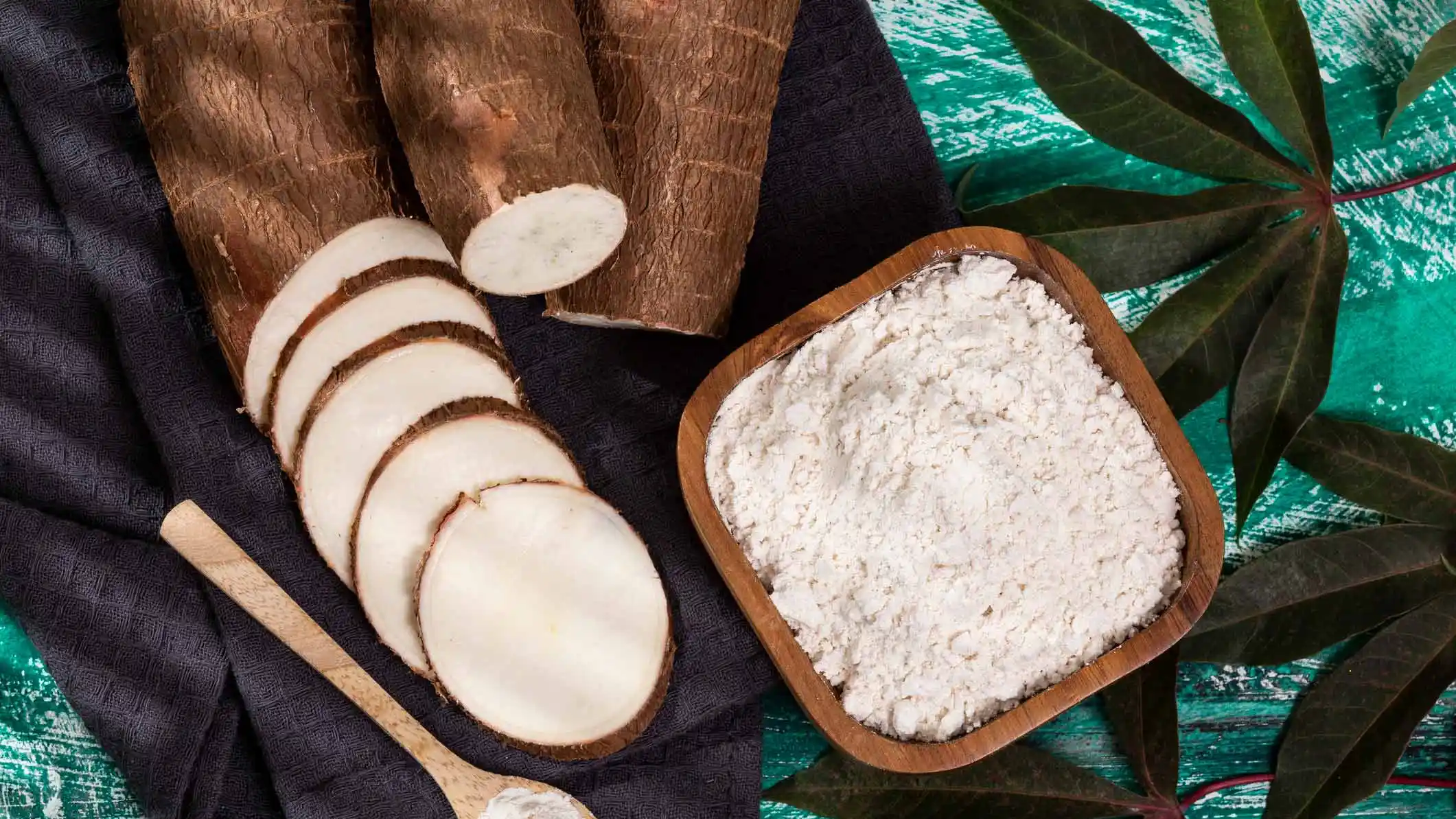
Cassava (Manihot esculenta) is rapidly shifting from a subsistence staple food to a high-value industrial crop. Indeed, it is globally recognized for its climate resilience and exceptional carbohydrate yield. Consequently, it serves as the foundation for multi-billion dollar sectors. These range from gluten-free baking and paper manufacturing to bio-ethanol and international food markets.
However, maximizing the profitability of cassava requires immediate, precise industrial processing. This is because fresh cassava roots contain upwards of 60% moisture alongside naturally occurring cyanogenic glycosides. Therefore, they spoil within 48 to 72 hours of harvest.
To bridge the gap between rural farming and industrial scale-up, processors definitely need complete turnkey agro-processing solutions. Fortunately, leading engineering innovators like Genex Tech Industries LLP design and manufacture food-grade stainless steel (SS304/SS316) processing lines. Ultimately, these systems deliver maximum yield, energy efficiency, and export-grade product standards.
In this article, this comprehensive guide breaks down the core processing lines for the six major cassava value-added products. Furthermore, it analyzes the advanced industrial drying technologies that make commercial production viable.
Part 1: Industrial Cassava Value-Added Production Lines
Every processing plant begins with standard upstream foundation steps. First, operators use industrial bubble washers to clean the roots and remove field soil (Harvesting & Cleaning). Next, Automated Peeling machinery strips the outer cortex without losing the starch-rich inner core. From there, the downstream lines diverge depending on the end product.
1. High-Quality Cassava Flour (HQCF) Plant
HQCF is a highly sought-after commodity in the global food industry. For instance, it acts as a premium wheat substitute in gluten-free baking, snack manufacturing, and industrial blending.
-
The Process: Initially, a heavy-duty chipping or grating machine slices the cleaned roots. Subsequently, a high-pressure press extracts excess water from the fine mash before a lump breaker separates it. Meanwhile, the system dries the material rapidly to avoid fermentation. Finally, an industrial pulverizer mills it into an ultra-fine powder.
-
Core Machinery:
-
Heavy-duty Root Chipping Machines
-
High-pressure Hydraulic Dewatering Presses
-
Industrial Pulverizers & Air Classifier Mills
-
Vibratory Sifters (Vibro Sifters) for strict particle size control
-
2. Commercial Garri Processing Line
Garri is a crunchy, granular fermented food staple widely consumed across West Africa. Converting this traditional process into an automated line ensures hygiene and massive volume expansion.
-
The Process: First, high-speed mechanical graters open up the starch cells. Next, the mash undergoes a controlled fermentation stage for 2 to 5 days, which safely reduces cyanogenic compounds and develops its characteristic sour flavor profile. Afterward, a hydraulic press dewaters the mash. Then, paddle-driven mechanical roasters cook and dry the product.
-
Core Machinery:
-
High-speed Industrial Graters
-
Stainless Steel Fermentation Racks
-
Heavy-duty Hydraulic Dewatering Systems
-
Rotary or Paddle-driven Mechanical Garri Roasters for uniform gelatinization without scorching
-
3. Industrial Cassava Starch Production Plant
Cassava starch boasts high paste clarity and viscosity. For this reason, it is an essential raw material in textiles, adhesives, bioplastics, paper manufacturing, and food thickening.
-
The Process: To begin with, high-efficiency rasping machines intensely grind the roots to release the starch granules bound inside the root cells. Following this, the slurry passes through extraction units where screens separate fine pulp from the liquid starch milk. Then, the system concentrates the starch milk. Finally, continuous centrifugal systems dewater it, and a dryer finishes it into a fine powder.
-
Core Machinery:
-
High-efficiency Rasping Machines (Grater units)
-
Centrifugal Sieve and Desanding Units
-
Continuous Centrifugal Dewatering Systems
-
High-velocity Cyclone Dust Collectors
-
4. Mechanized Atieke Processing Systems
Atieke is a steamed, couscous-like cassava product traditional to Côte d’Ivoire. Presently, it is growing in global popularity as an ethnic specialty food.
-
The Process: Following peeling and washing, automated graters grind the roots. Next, operators mix the mash with a small portion of previously fermented cassava paste, which acts as a starter culture. After a short fermentation phase, a hydraulic press dewaters the paste. Then, a granulator breaks it down into uniform spherical grains. Additionally, continuous steaming conveyors cook the grains before a light drying phase stabilizes them.
-
Core Machinery:
-
Industrial Granulators and Rounding Decks
-
Continuous Industrial Steaming Conveyors
-
Granule Separation Vibratory Decks
-
5. Cassava Bio-Ethanol Distillation Plant
Because of its dense starch reserves, cassava is an exceptional, sustainable feedstock. Therefore, industry widely uses it for bio-fuel, pharmaceutical-grade alcohol, cosmetics, and industrial solvents.
-
The Process: In the first place, enzymes drive hydrolysis (liquefaction and saccharification) inside jacketed tanks to break long-chain starches into fermentable sugars. Secondly, pumps transfer this sugar broth into industrial fermenters where specialized yeast converts it into an alcohol mash. In conclusion, the mash travels through multi-stage distillation and dehydration columns to yield high-purity ethanol.
-
Core Machinery:
-
Jacketed Liquefaction & Saccharification Tanks
-
Continuous Industrial Fermenters
-
Multi-Stage Distillation Columns & Molecular Sieve Dehydration Units
-
6. Cassava Chips Manufacturing Line
Cassava chips are thick, unground, dried pieces of root. Generally, global buyers primarily trade them in bulk for animal feed formulations and raw feedstock inputs.
-
The Process: First of all, high-capacity slicers automatically cut whole roots into uniform thicknesses. Naturally, this setup ensures uniform drying rates. After that, industrial drying systems receive the wet chips and reduce moisture down to a safe, stable 12% target. Finally, bulk bagging lines weigh and pack them.
-
Core Machinery:
-
High-Capacity Industrial Slicers / Chippers
-
Automated Belt Feed Hoppers
-
Bulk Packaging & Bagging Weigh-lines
-
Part 2: Advanced Drying Technologies – The Core of Processing
Drying is the most critical and energy-intensive step in any cassava plant. Thus, choosing the correct industrial dryer dictates your final product texture, shelf-life, fuel cost, and throughput capacity.
Pneumatic Flash Dryers
For starch and High-Quality Cassava Flour (HQCF), GTI Industrial Flash Dryers are the undisputed industry standard.
-
How It Works: Initially, the system introduces wet cake or pulverized material into a high-temperature, high-velocity stream of hot air inside a vertical drying duct. Because of the intense heat and massive mass transfer area, moisture evaporates flash-instantly within 1 to 3 seconds as the material flies upward. Ultimately, cyclone separators and bag filters isolate the dried, free-flowing powder from the exhaust air.
-
Best Suited For: Cassava Starch, High-Quality Cassava Flour (HQCF).
-
Key Industrial Value: Above all, instantaneous thermal transfer prevents heat-sensitive starch degradation. Consequently, this preserves ideal viscosity and ensures zero microbial growth during the drying phase.
Industrial Band & Apron Dryers
When handling coarse, bulky solids like sliced cassava chips, a GTI Continuous Band Dryer or apron conveyor setup provides optimal results.
-
How It Works: First, feed hoppers distribute wet cassava slices uniformly onto a robust moving conveyor belt or metal apron band. Next, the product travels through an insulated, multi-zone chamber. In this area, fans continuously force hot air either upward or downward through the product bed. Meanwhile, precision controls manage temperature profiles and belt speed to step down moisture safely.
-
Best Suited For: Industrial Cassava Chips.
-
Key Industrial Value: In contrast to other systems, this setup accommodates high-volume, bulk solid materials with long residence time requirements. As a result, it effectively avoids the product agitation that shatters chips into unwanted dust.
Continuous Mesh Belt Dryers
Operating on a similar mechanical platform to the band dryer, the Food Tech Projects Mesh Belt Dryer utilizes an open-weave stainless steel wire mesh conveyor.
-
How It Works: To begin with, material rests on the open mesh while forced convective hot air passes through the perforated openings. This mechanism ensures total 360-degree exposure of the cassava particles to the thermal air currents. Hence, it creates uniform drying conditions across the entire conveyor width.
-
Best Suited For: Cassava Chips, granulated products, and larger food fractions.
-
Key Industrial Value: Specifically, this method delivers exceptionally uniform moisture reduction across heavy bed depths. Therefore, it creates a consistent 12% moisture profile that prevents pocket mold during maritime shipping.
Combination Fluid Bed Dryers
For elite-tier food products where uniformity, density, and color are premium parameters, the Combination Fluid Bed Dryer represents next-generation hybrid engineering.
-
How It Works: In essence, this system fuses multi-layer tray/belt conveyor mechanisms with true fluidization technology. To start, the initial zones slowly pre-dry the fragile or wet product on circulating trays. Clearly, this step prevents surface hardening or scorching. In the final stage, the product lands on a stainless steel grid plate where targeted high-pressure air suspends and fluidizes the particles into a boiling-like state of rapid mass transfer.
-
Best Suited For: High-end Cassava Flour, specialty Atieke granules, and modified food starches.
-
Key Industrial Value: As a result, it eliminates clumping completely, achieves highly accurate moisture equalization, and delivers a free-flowing final product with superior bulk density and instant solubility.
Technical Comparison of Cassava Drying Technologies
To help project planners select the correct hardware configuration, here is a breakdown of the primary operational metrics across industrial dryers:
| Drying System | Material Feed Form | Residence Time | Primary Cassava Application | Key Operational Advantage |
| Pneumatic Flash Dryer | Wet cake / Crushed fine mash | 1 – 3 Seconds | Cassava Starch, HQCF | Instantaneous drying; zero thermal damage to fine powders. |
| Industrial Band Dryer | Coarse slices / Slabs / Bulky pieces | 15 – 60+ Minutes | Bulk Industrial Cassava Chips | Designed for heavy structural mass and long, staged residence times. |
| Mesh Belt Dryer | Granules / Uniform slices / Dices | 10 – 45 Minutes | Export-grade Cassava Chips, Large Food Fractions | Open-weave mesh ensures excellent convective air penetration and zero wet spots. |
| Combination Fluid Bed | Grains / Pastes / Agglomerates | Multi-Stage (Variable) | Atieke Granules, Premium Flour, Modified Starch | Prevents surface hardening; delivers superior free-flowing particle traits. |
Why Invest in Modern Turnkey Machinery?
Relying on legacy processing or makeshift drying yards introduces weather dependencies, high labor expenses, and severe yield losses. On the contrary, partnering with professional turnkey manufacturers like Genex Tech Industries LLP provides several distinct engineering advantages:
-
Food-Grade Construction: Fully compliant SS304/SS316 contact parts safeguard products against contamination. Thus, this easily fulfills export regulations for European and US FDA markets.
-
Process Automation: Furthermore, optional PLC and SCADA integration allows a central operator to oversee temperature zones, feed rates, and mechanical speeds. Therefore, this drastically lowers human error risks.
-
Thermal Efficiency: In addition, insulated drying chambers, unique aerodynamic ducting, and advanced heat-recovery loops reduce energy use per kilogram of finished product.
-
Scale Customization: Finally, engineers precisely design each plant around raw root input capacity. For example, setups can range from a localized 10 Tons Per Day (TPD) rural upgrade to a massive 200 TPD industrial milling hub.
Launch Your Cassava Venture
Are you planning to capitalize on the booming global market for cassava flour, starch, or bio-energy? Then don’t leave your product quality to chance. Please get in touch with the engineering and project development specialists today to request custom process flow designs, precise plant layouts, or a comprehensive technical quotation.
-
📧 Technical Inquiries: mktg@foodtechprojects.com
-
📞 Phone / WhatsApp Support: +91 93300 77417
-
🌐 Engineering Portals: www.foodtechprojects.com | www.gtidryers.com