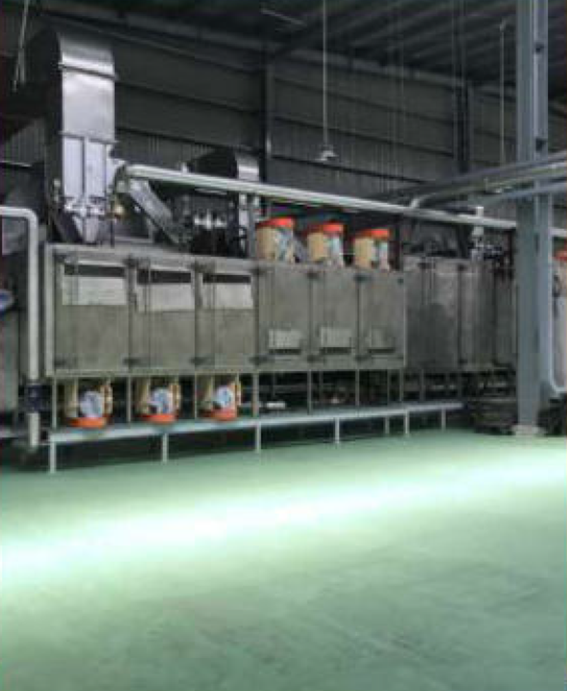
In the landscape of modern industrial processing, achieving consistent moisture reduction while maintaining product integrity poses a significant challenge. Consequently, businesses across the food, chemical, and agricultural sectors constantly seek highly efficient thermal dehydration solutions. Among the various technologies available today, the industrial band dryer stands out as a premier choice for continuous operation.
However, achieving peak processing efficiency depends heavily on the engineering quality of your equipment. For this reason, selecting an experienced band dryer manufacturer is a critical decision for your production line. In this comprehensive guide, we will explore how band dryers work, their primary industrial applications, and how to choose a manufacturing partner that aligns with your operational goals.
Understanding the Mechanics: How Does a Band Dryer Work?
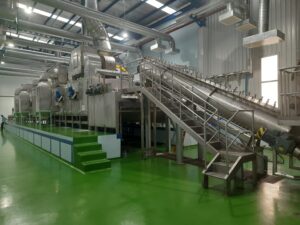
To begin with, it is essential to understand the underlying engineering principles of this technology. A band dryer, which operators also commonly call a belt dryer or an apron dryer, relies on the principle of convective heat transfer.
Initially, a specialized feeding or distribution system spreads the wet raw material onto a continuous, perforated conveyor belt. Afterward, the belt transports the product through a series of heavily insulated drying chambers. While the material moves continuously through these zones, powerful fans force heated air vertically or horizontally through the product bed.
Subsequently, the system evaporates the moisture and continuously evacuates it through an optimized exhaust setup. Because the material remains stationary relative to the conveyor belt, the process virtually eliminates physical friction. As a result, this system uniquely serves fragile, brittle, or shaped products that would otherwise degrade in a tumbling rotary drum.
Key Engineering Features of High-Quality Band Dryers
When you evaluate systems from a premium Band Dryer Manufacturer, several advanced technical features deserve careful consideration:
-
Multi-Zone Temperature Control: First and foremost, advanced band dryers feature independent temperature and airflow zones. Therefore, operators can apply high heat at the initial stage to flash off surface moisture, followed by lower temperatures in the final stages. This precise staging effectively prevents case hardening.
-
Variable Speed Conveyors: In addition, operators can precisely adjust the dwell time of the product using variable frequency drives (VFDs). Consequently, you can process materials with highly variable initial moisture contents without sacrificing product quality.
-
Hygiene and Material Compliance: For food-grade and pharmaceutical applications, manufacturers must construct systems using premium Stainless Steel (SS304 or SS316). Furthermore, the internal chambers should feature smooth welds and easy-access doors to facilitate rapid Cleaning-In-Place (CIP) protocols.

Primary Industrial Applications
Because of their versatile and gentle drying mechanism, global industries utilize continuous belt systems across a vast array of operations.
1. Advanced Food Dehydration
In the food processing sector, retaining flavor, color, and nutritional value is paramount. Therefore, facilities extensively use band dryers to dehydrate vegetables such as onions, garlic, ginger, and marigold flowers. Similarly, these systems excel at processing extruded snacks, starch, and delicate herbs. If you want to explore the specific impact of this technology on food preservation, you can read our detailed guide on industrial band dryer food dehydration.
2. Specialized Coconut Processing
Processing high-fat materials presents a distinct set of engineering hurdles. For instance, desiccated coconut, coconut chips, and threads require low-temperature drying to prevent oil scorching and clumping. By utilizing a customized apron setup, processors can safely reduce moisture to less than 3% while perfectly preserving the natural whiteness and aroma of the coconut. For a deeper look into specialized agro-processing layouts, feel free to browse our resources on Coconut Projects.
3. Sustainable Waste-to-Value & Insect Protein
In recent years, the circular economy has driven massive demand for alternative proteins and organic fertilizers. Specifically, the commercial production of Black Soldier Fly Larvae (BSFL) requires robust, large-scale moisture removal. High-capacity belt systems ensure uniform drying of insect protein and bio-fertilizers, transforming organic waste into high-value commercial commodities. To learn more about setting up these advanced lines, check out our comprehensive industrial band dryer guide.
How to Select the Right Band Dryer Manufacturer
Choosing a machinery partner goes far beyond comparing basic price quotes. To ensure a maximum return on investment (ROI), keep the following criteria in mind during your selection process:
-
Custom Engineering Capabilities: Every material behaves differently under thermal stress. Thus, your chosen manufacturer should offer custom-tailored feeding mechanisms, airflow configurations, and heating options (such as steam, gas, or thermic fluid) that match your product’s specific characteristics.
-
Manufacturing Standards & Certifications: Reliable industrial machinery must adhere to stringent international benchmarks. Ensure that the manufacturer holds certifications such as ISO 9001:2015, CE compliance, and US FDA alignments for food-contact surfaces.
-
Pilot Testing Facilities: Ultimately, empirical testing provides the best way to validate a drying profile. A truly professional manufacturer will maintain a pilot laboratory where you can run product samples to determine exact drying curves, energy consumption rates, and optimal bed depth.
Conclusion
In summary, implementing an industrial band dryer offers an excellent strategy for scaling up production, improving thermal efficiency, and maintaining superior product quality. Whether you expand a commercial food processing facility, optimize a coconut production line, or scale an insect protein venture, the right equipment makes all the difference.
Therefore, investing time to find a certified, technically proficient manufacturing partner is essential. By focusing on custom engineering, strict compliance standards, and proven multi-zone thermal control, you can secure a reliable system that drives your business forward for decades to come.
Partner with an Industry-Leading Band Dryer Manufacturer
Are you looking to upgrade your existing processing line, reduce operational energy costs, or scale up a new dehydration project? Choosing the right equipment configuration represents the first and most critical step toward long-term operational success.
Our team of senior thermal engineers stands ready to design a custom, highly efficient continuous band dryer tailored entirely to your specific product characteristics, throughput requirements, and factory floor layout. Don’t leave your product quality to guesswork—let us help you optimize your drying curve with proven industrial engineering.
Get in Touch for a Custom Consultation & Quote:
-
📧 Email Us directly: mktg@foodtechprojects.com
-
📞 Call / WhatsApp our Technical Team: +91 93300 77417
Alternatively, feel free to drop your specific material details, target moisture levels, and hourly capacity requirements into our mail. Our engineering desk will get back to you within 24 business hours with a preliminary process layout.